


| A straight coax cable behind a wall-mounted TV gets crushed. A right-angle adapter fixes it. 📐 The problem: F-type connectors stick straight out of the TV’s coaxial port. When the TV is flush against the wall, the cable bends sharply to exit sideways. That sharp bend is not just ugly — it creates an impedance discontinuity that reflects signal, and it stresses both the cable and the port over time. 🔌 What a right-angle adapter does: It redirects the connection 90 degrees so the cable runs flat against the wall. No sharp bend, no port stress, and the signal path stays clean. The male end screws into the TV, the female end accepts the cable. 📡 Why impedance matters: At TV and satellite frequencies, even small mismatches cause reflections that degrade the picture — HD channels fail first because they need more bandwidth. 🔍 What to check: Solid brass construction (not zinc alloy, which corrodes and loosens), a tight threaded fit that does not wiggle, and compatibility with RG6 cable — the standard for modern TV and satellite. 🛒 A pack of five covers multiple wall-mounted TVs plus spares — these are easy to lose behind furniture. 🔗 CGCCable stocks 5-piece right-angle F-type RG6 adapters — the clean fix for wall-mounted TV coaxial connections. 👉 BUY NOW:https://cgccable.com/product/f-type-rg6-adapter-32090 #CGCCable #coaxcable #FType #RG6 #TVantenna #CCTV #satelliteTV |
Related posts
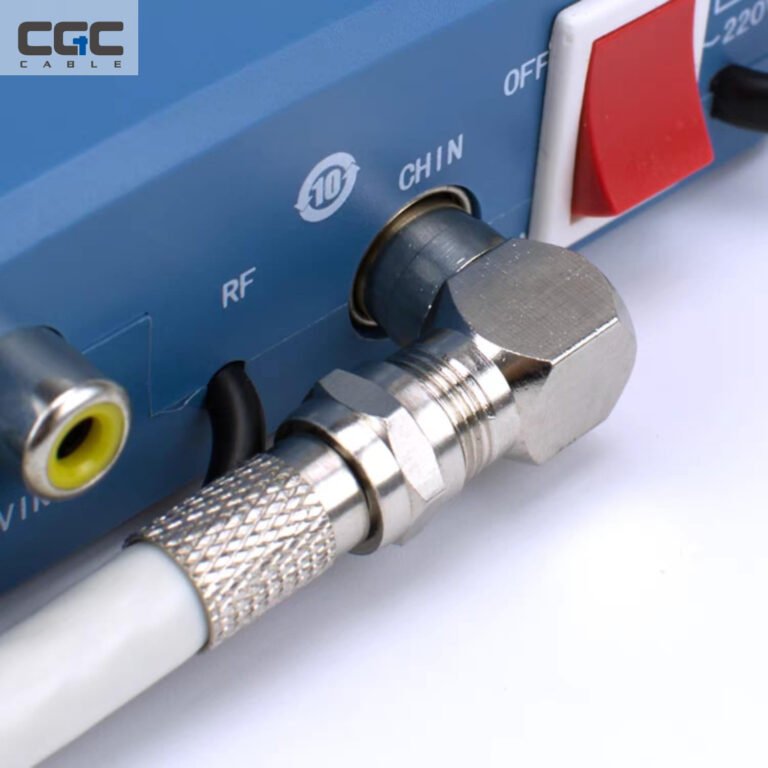
Right-Angle F-Type Adapter: Solving the Wall-Mount TV Cable Problem
A straight coax cable behind a wall-mounted TV gets crushed. A right-angle adapter fixes it.📐 The problem: F-type connectors stick stra...
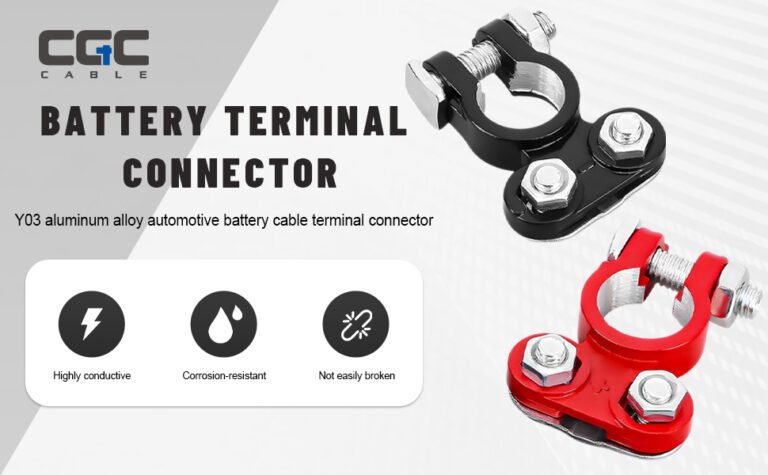
Battery Terminal Connectors: Fixing the ‘Car Won’t Start’ Culprit
Battery terminals are the most neglected part of a car's electrical system — and the top cause of "my car won't start" that is not actu...

Ethernet Couplers: When They Work — and When They Cause Problems
An Ethernet coupler is a female-to-female adapter that joins two cables. It seems too simple to cause trouble, but it can.📡 What a coup...

Bulk Cat5 Ethernet Cable: Solid Core, Custom Lengths, and the CCA Caveat
Bulk Ethernet cable without connectors seems inconvenient — until you need a 12-foot run and only have a 25-foot cable.🌐 Why bulk cable...

22AWG Low-Voltage Wire: When Thinner Wire Is the Right Choice
Thicker is not always better. For low-power runs, 22AWG is often the smarter, neater choice.💡 What 22AWG is good for: Low-voltage, low-...

14AWG Speaker Wire: When You Actually Need the Thick Stuff
14AWG is the thick end of speaker wire. You do not always need it — but when you do, nothing thinner will do.📏 What 14AWG is for: Subwo...

Single-Conductor Black Wire 18AWG: The Ground Half of Your Circuit
Every circuit needs a return path. If you bought red wire for the positive side, you need black for the ground.⚫ What single-conductor ...

Single-Conductor Red Wire 18AWG: When You Only Need One Color
Most low-voltage wire comes as a red/black pair. But sometimes you need a single color — and buying a paired cable means wasting half o...

Transparent Speaker Wire: Why You Can See Through Good Cable
Speaker wire with a clear jacket looks different for a reason — and it is not just for show.🔍 Why transparent: A clear jacket lets you ...

Short SAE Sidewall Port (30cm): A Compact Flush-Mount 12V Point
Sometimes you need a flush-mount SAE port, but the standard long-lead version is overkill. A 30cm short-lead port fits tight spaces.🔌 W...

SAE Extension Cable: Extending a 12V Connection the Right Way
An SAE extension is the simplest SAE product — a male on one end, a female on the other — and also the one where polarity mistakes happ...

SAE Y-Splitter 2-to-1: Combining or Splitting 12V Accessories
Two SAE devices, one battery lead — or one device fed from two sources. A 2-to-1 splitter covers both, with the same caveat as any spli...